


How to Protect Art Prints: The Ultimate Guide to Preservation
A single stray fingerprint can degrade a premium semi-gloss finish by transferring acidic oils that eat away at the ink within just 12 months. It's a silent killer for your collection. You've invested in original artwork to transform your space, so you need to know exactly how to protect art prints from the moment they arrive at your door. We know the feeling of opening a new shipping tube; it's a mix of excitement and the absolute fear of leaving a permanent crease in a vibrant, limited edition piece.
You deserve a display that stays crisp, clean, and museum-quality until 2050 and beyond. This guide delivers the professional techniques you need to handle, frame, and display your art so it survives the test of time. We'll cover everything from humidity control to blocking 99% of harmful UV rays with the right archival glass choices. Stop worrying about fading colors or dusty frames and start building a legacy. It is time to preserve your passion and PUT UP SOME ART.
Key Takeaways
- Master the "Clean Hands" protocol to stop skin oils from damaging your premium semi-gloss paper the second it leaves the tube.
- Treat your frame as a vital exoskeleton and choose UV-protective glazing to keep your iconic colors from fading.
- Use our "Safe Zone" checklist to protect art prints from direct sunlight and the most common environmental threats.
- Identify the specific humidity triggers in your home that cause "cockling" and permanent wavy paper damage.
- Ensure your original artwork remains vibrant and gallery-quality for decades with professional handling and display techniques.
Handling Your Art Prints: The First Rule of Preservation
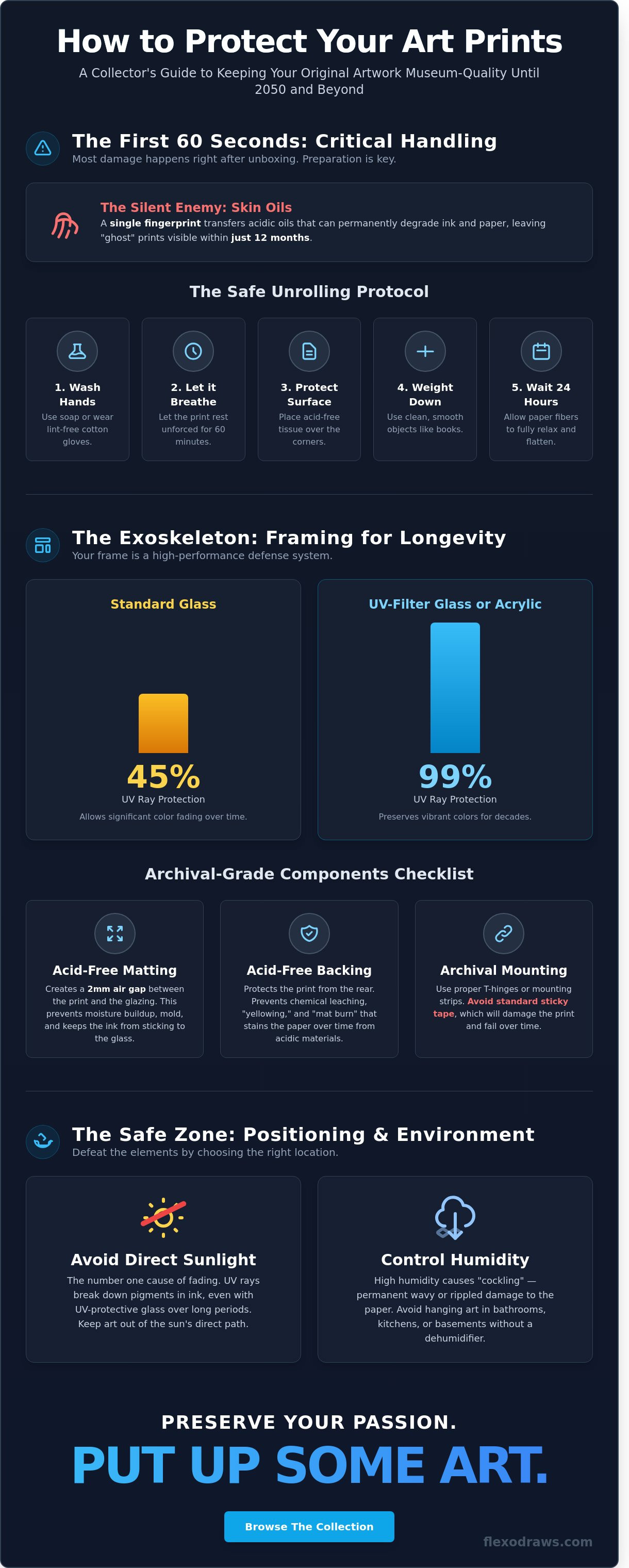
The first 60 seconds after you crack open a shipping tube are the most dangerous. This is the peak moment of vulnerability for your original artwork. Most damage occurs because of rushed handling or a lack of preparation. To protect art prints, you need a plan before the cap even comes off. When a rolled print is released, it wants to snap back into its coiled shape. Forcing it flat too quickly can cause permanent creases or "half-moon" crinkles that ruin the visual flow of the piece.
Skin oils are the silent enemy. Even clean hands carry natural acids and moisture that react with premium paper. By understanding the printmaking process, you realize that high-quality paper is a porous, living medium. It absorbs oils instantly. These marks might be invisible at first, but they eventually oxidize and leave permanent "ghost" prints on the surface. Prepare a flat, dust-free landing zone on a hard table. Clear away any grit that could scratch the vibrant Gelato printed surface during the unrolling process.
The Unrolling Process: Step-by-Step
Precision matters when you're dealing with professional-grade decor. Follow these steps to ensure your print stays pristine:
- Wash and dry hands thoroughly with grease-cutting soap or use lint-free cotton gloves for maximum protection.
- Let it breathe. Remove the print from the tube and let it sit on your flat landing zone for at least 60 minutes. Don't force it down yet.
- Use protective tissue. Place the acid-free tissue paper that came with your print over the corners.
- Weight it down. Use smooth, heavy objects like large books on the corners. Ensure the weights are clean and rest only on the tissue paper.
- Wait 24 hours. Give the fibers time to relax into their new flat state.
Handling Semi-Gloss Finishes
Flexo Draws prints often feature a premium semi-gloss finish. This provides a bold, iconic look, but it requires specific care. Avoid touching the printed surface directly. Pressure from your fingertips can cause "glossing," which creates shiny spots that disrupt the artistic integrity of the work. Always hold prints by the extreme edges or the white border. If you're working with a Standard A3 Poster Size, you have a specific handling area that makes this easier. Use that margin to maneuver the piece into its frame without your fingers ever crossing into the artwork itself. This discipline is the best way to protect art prints from day one.
How to Frame Art Prints for Maximum Longevity
Your frame is a high-performance exoskeleton. It's the primary defense system to protect art prints from environmental chaos. Without a solid barrier, dust and humidity will degrade your investment quickly. Professional framing creates a controlled microclimate. It's the difference between a fading memory and a lifelong gallery centerpiece. Every component matters. From the glass to the backing, quality is non-negotiable.
Yellowing is the enemy of any serious collector. This happens when lignin in cheap materials turns acidic over time. You need 100% acid-free components. This isn't marketing fluff; it's chemical reality. If you want your collection to stay sharp, you must ensure every layer is archival grade. This prevents the "mat burn" that ruins the edges of premium paper.
Choosing Your Glazing: Glass vs. Acrylic
Glazing is your shield against UV radiation. Standard glass only filters about 45% of harmful rays. You should upgrade to UV-filter glass to block 99% of light damage. This is vital for high-vibrancy A3 Art Prints where color integrity is the priority. Acrylic is a powerful alternative. It's 50% lighter than glass and shatterproof. Never use cheap plastic sleeves for long-term display. They trap heat and can fuse to the ink, destroying the artwork permanently.
Mounting and Matting Techniques
Matting isn't just for aesthetics. It creates a critical 2mm breathing space between the art and the glazing. This gap prevents moisture from getting trapped and causing mold growth. Following professional archival matting and framing techniques ensures the print surface never touches the glass. This is essential for maintaining the physical integrity of the paper fibers.
- Use acid-free mat board to create a chemical barrier.
- Avoid standard sticky tape. Use archival-grade mounting strips or T-hinges.
- Ensure the backboard is also acid-free to protect art prints from the rear.
Ready to transform your space with premium quality? Browse our latest original artwork and start your collection. PUT UP SOME ART.
Defeating the Elements: Positioning and Environmental Care
Your walls tell a story. Don't let the environment ruin the narrative. To properly protect art prints, you must master the physics of your room. Sunlight and moisture are the primary enemies of premium semi-gloss paper. Direct UV exposure triggers a chemical reaction in ink pigments, causing iconic colors to fade. Keeping your collection out of the sun's path is non-negotiable for long-term vibrancy. Even high-quality Gelato printed pieces require a shield from the sun's reach.
Humidity is the silent culprit behind "cockling." When a room's relative humidity fluctuates beyond the 40% to 60% gold standard, paper fibers expand and contract. This results in a frustrating wavy appearance that ruins the flat, professional look of your display. Following professional conservation framing advice ensures your artwork stays buffered against these atmospheric shifts. A stable environment is the secret to a gallery-quality home gallery.
The Environmental Checklist for Art
- Keep art away from heat sources like radiators or fireplaces. Sustained heat above 25°C makes paper brittle and prone to cracking.
- Avoid hanging prints on damp-prone external walls or in poorly ventilated bathrooms. Trapped moisture breeds mold and destroys paper integrity.
- Rotate your collection every six months. It limits total light exposure and keeps your living space visually dynamic.
Cleaning and Dusting Safely
Maintain that gallery-fresh look without the risk. Use a dry microfibre cloth for the frame and glass. Never spray glass cleaner directly onto the frame. Liquid can seep behind the glass and ruin the protect art prints strategy by staining the edges of the paper. Check the frame seal once a year. Look for signs of dust or insect entry that could compromise the original artwork inside.
Professional maintenance isn't about complexity; it's about consistency. Use these steps to safeguard your investment in culture and craft. Trust your eyes, respect the materials, and PUT UP SOME ART with total confidence.
Future-Proof Your Gallery Walls
Investing in high-quality decor is only the first step. To truly protect art prints, you've got to master the environment. Start with clean hands to prevent oil transfer; conservation experts at the Library of Congress confirm skin oils degrade paper fibers over decades. Use frames with UV-filtering glass to block up to 99% of harmful rays that cause fading. Keep your collection away from damp walls or direct heat sources to prevent warping. These simple steps ensure your investment remains as vibrant as the day it arrived.
Flexo Draws delivers more than just images. Every piece is original artwork designed to make a statement. We use premium semi-glossy paper for a professional finish that stands out in any light. Whether you're a fan of iconic film moments or Irish racing heritage, these prints are built to last. We offer national shipping across Ireland, bringing gallery-quality art straight to your door.
PUT UP SOME ART: Explore our premium A3 collection today
Transform your space with confidence and let your passion for great design shine through.
Frequently Asked Questions
Can I use hairspray to protect my art prints from fading?
No, you should never use hairspray to protect art prints because the chemicals cause yellowing and acidity within 24 months. Standard hairspray contains alcohol and lacquers that degrade premium semi-gloss paper. Instead, invest in museum-grade acrylic or glass with 99% UV protection to block harmful rays. This ensures your vibrant racing or cinematic art stays sharp for 75 years without chemical damage.
Should I keep my art prints in the original shipping tube for long-term storage?
No, tubes are strictly for 7 to 14 days of transit. Keeping prints rolled for longer than 30 days creates a permanent curl memory that makes framing difficult. Store your original artwork flat between two sheets of acid-free glassine paper. Use a flat file or a rigid portfolio to prevent edge damage and ensure the 200gsm paper stays perfectly level for framing.
Is it okay to touch art prints with bare hands if they are 'premium' quality?
No, even the highest quality Gelato printed art is vulnerable to the natural oils and pH levels on your skin. Bare fingers leave invisible prints that oxidize and become visible brown spots over 5 years. Always wear 100% white cotton gloves when handling your collection. This simple step preserves the pristine surface of your premium prints and prevents permanent smudging on bold, dark ink areas.
How do I stop my art prints from waving or buckling inside the frame?
Stop buckling by using a mat board or spacers to create a 2mm gap between the art and the glass to protect art prints from moisture. When paper touches glass directly, it traps condensation, leading to cockling or waving. Maintain a consistent humidity level of 45% in your gallery space. This prevents the fibers in the 200gsm paper from expanding, keeping your iconic Irish heritage prints flat. PUT UP SOME ART.