


A3 Poster Framing Guide: How to Level Up Your Art in 2026
Your limited edition Tommy Shelby or Nürburgring print deserves better than a piece of blue tack and a prayer. If you want to transform your living space from a student dorm to a premium gallery, you need a definitive A3 poster framing guide that cuts through the jargon. A poster taped to a wall is just a memory, but a poster framed with precision is a masterpiece. It is time to PUT UP SOME ART with the professional finish it deserves.
You probably know the frustration of a rolled poster that refuses to lay flat or the confusion of trying to match A3 dimensions to a frame that actually fits. It's stressful to handle a vibrant, original artwork when you're terrified of a single crease or fingerprint ruining the semi-gloss finish. We've all been there, staring at a frame that is just a few millimeters off while worrying about damaging a piece you love.
This guide will show you exactly how to choose the right materials and mount your prints like a professional. You'll learn how to protect your investment and ensure your art stays vibrant for years. We'll cover everything from choosing between ready-made and custom frames to the latest 2026 trends in warm earth tones and oversized statement pieces.
Key Takeaways
- Master the exact A3 dimensions and material choices to ensure your original artwork looks like a premium gallery piece.
- Follow this A3 poster framing guide to safely unroll your prints and prep your glass for a professional, dust-free finish.
- Apply the gallery-standard "Eye-Level" rule to hang your art at the perfect height for maximum visual impact.
- Learn how to group multiple A3 frames into a high-impact grid that transforms any blank wall into a curated statement.
Selecting the Perfect Frame for A3 Art Prints
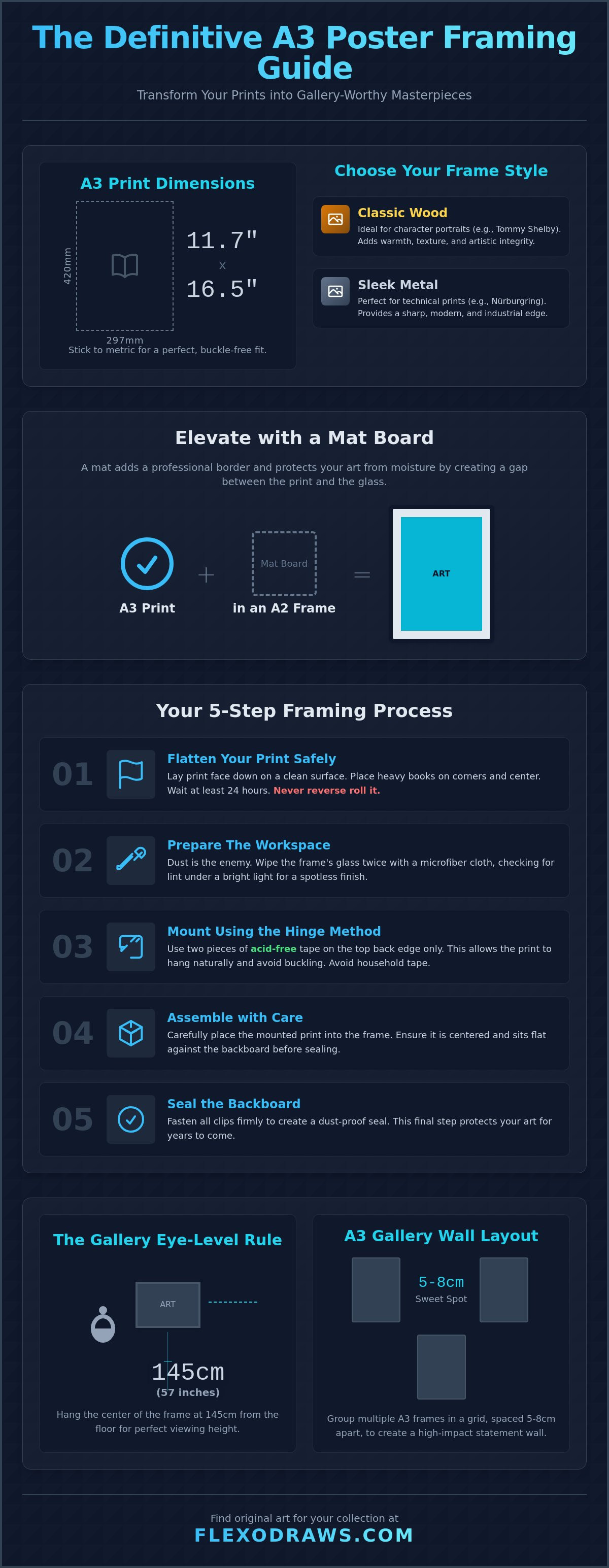
Precision matters. An A3 print measures exactly 297 x 420mm, which translates to 11.7 x 16.5 inches. Many guides focus on US sizes, but sticking to these metric standards ensures your original artwork sits flush against the backing. This A3 poster framing guide is your roadmap to a clean, professional finish. Avoid the frustration of a print that buckles because the frame is a fraction too small.
Frame depth is the secret weapon of high-end galleries. A deeper box frame creates a shadow gap that pulls the viewer in. It makes the vibrant colors of a premium semi-gloss print pop. This extra depth transforms a simple poster into a structural piece of decor. It's a bold choice for anyone looking to make a statement with their collection. You don't want your art to look flat; you want it to have presence.
Wood vs. Metal: Which Suits Your Style?
Classic wood frames are the perfect partner for gritty, iconic character portraits like Tommy Shelby or the Joker. The texture of the timber complements the artistic integrity of the work. For technical, high-energy prints like the Nürburgring track map, choose sleek metal. It offers a sharp, industrial edge that matches the precision of the racing lines. Wood frames provide a traditional warmth, whereas metal frames offer a more modern, durable structure for long-term display.
The Secret to Using Mat Boards with A3
A mat board adds immediate class. If you want that crisp white border, you must buy an A2 frame. An A3 print needs that extra space to breathe. Beyond the visual appeal, a mat is a functional shield. It creates a gap between the art and the glazing, preventing moisture from ruining your limited edition prints. Mastering these picture frame basics is essential for any serious collector. PUT UP SOME ART with confidence.
How to Frame Your A3 Poster: A Simple 5-Step Process
You’ve finally secured that limited edition Joker or Stranger Things print. Now, don’t ruin the moment by rushing the assembly. This part of our A3 poster framing guide focuses on the physical handling of your art. It’s about precision and patience to ensure a gallery-standard result. A rushed job leads to trapped dust and skewed edges; a steady hand leads to a masterpiece.
Safely Flattening Your Rolled Print
Never reverse roll your art. This common mistake can crack the premium semi-gloss surface or create permanent waves in the paper. Instead, find a clean, flat surface. Lay the print face down on a piece of protective tissue paper. Place heavy, flat books on the corners and center. Leave it for at least 24 hours. This patience pays off with a perfectly flat print that won't fight you during the mounting process.
Clean the glass twice. Dust is the enemy of a clean display. Use a microfiber cloth to remove every speck before the art goes near the frame. Static often attracts lint, so double-check the surface under a bright light. If you’re starting with original artwork from a passionate creator, you owe it to the piece to use the right tools and a clean workspace.
Mounting Without the Mess
Avoid standard sellotape or masking tape. These household adhesives contain acids that will yellow your art and eventually peel the paper away. Archival-safe mounting involves using pH-neutral materials that secure the artwork without causing chemical degradation or physical stress over time. Use the hinge method instead of taping all four corners. Apply two small pieces of acid-free tape to the top back edge only. This allows the paper to expand and contract naturally with temperature changes without buckling.
Seal the backboard firmly. Ensure the clips are tight to prevent dust from creeping in over the coming years. A professional, dust-proof finish is what separates a DIY job from a premium gallery display. It's the final step in protecting your investment. PUT UP SOME ART.
Styling and Hanging Your Framed A3 Art
Hanging your art is the final act of creation. Don't leave it to guesswork. This A3 poster framing guide recommends the gallery standard: the 145cm rule. Measure 145cm from the floor to the center of your frame. This height ensures your iconic prints sit at the natural eye level of most viewers. It creates a consistent, professional line across your entire room. Consistency is the difference between a cluttered wall and a curated collection.
High-impact statements come from smart grouping. Try a grid of three A3 frames to anchor a large wall. Mixing subjects adds character and depth to your home. Pair a technical Nürburgring track map with a minimalist movie poster or a gritty character portrait. This contrast between data-driven lines and cinematic chaos feels intentional. It shows you aren't just a collector; you're a curator of your own space. It's a bold move that pays off.
The A3 Gallery Wall Layout
Spacing defines the vibe. For A3 frames, the "sweet spot" is between 5cm and 8cm. Any closer and the wall feels cramped. Any further and the connection between the pieces is lost. Use a spirit level to ensure your bold new art isn’t wonky. Even a slight tilt ruins the visual flow of a premium display. For more inspiration on layouts, check out our guide on A3 Art Prints: The Ultimate Guide to Styling Your Space.
Protecting Your Investment
Placement is about preservation. Keep your original artwork away from radiators and damp walls. Heat and moisture are the enemies of premium semi-gloss paper. They cause warping and mold that can devalue your limited edition prints. Lighting is equally critical. Avoid direct sunlight. UV rays eventually bleed the vibrant ink from your prints, even if you use high-quality glazing. Ensure your art has a "breathing" gap within the frame to prevent the paper from sticking to the glass. Protect your gear. PUT UP SOME ART.
Transform Your Walls Into a Premium Gallery
You now have the tools to move beyond basic decor. By following this A3 poster framing guide, you've learned how to respect the 297 x 420mm standard and protect your prints from the elements. You know that a 145cm hanging height and a 24-hour flattening period are the marks of a collector who values quality. These steps ensure your vibrant, iconic prints remain a focal point for years to come. It's about pride in your space and your passion.
Don't settle for mass-produced alternatives or soul-less AI generated art. Every piece we offer is original artwork printed on premium semi-gloss paper for a professional, high-end finish. Whether you're chasing the thrill of the Nürburgring or the grit of Tommy Shelby, our collection delivers artistic integrity directly to your door. We offer global shipping on all our iconic movie and racing prints to help fans everywhere level up their decor. It is time to treat your walls with the respect they deserve.
Shop the Flexo Draws Original Artwork Collection
Your collection is a reflection of what you love. Stop waiting for the perfect moment and start building your gallery today. PUT UP SOME ART.
Frequently Asked Questions
What size frame do I need for an A3 poster?
You need an A3 frame measuring exactly 297 x 420mm if you want the art to sit flush against the edges. This is the standard for most ready-made frames. If you prefer a more premium look with a white border, choose an A2 frame with an A3 mount. This extra space lets your original artwork breathe while making a bolder statement on your wall. It transforms a simple print into a gallery piece.
Can I frame an A3 poster without a mat board?
Yes, you can frame your art without a mat board; this is often called flush framing. It works exceptionally well for bold, vibrant movie posters or technical racing prints where you want the focus entirely on the image. Just ensure the frame is deep enough to prevent the semi-gloss paper from pressing too hard against the glass. It's a popular choice for smaller spaces where a large mount might feel overwhelming.
How do I stop my poster from rippling inside the frame?
Flattening your print for 24 hours before assembly is the best way to prevent rippling. Use the heavy book method mentioned in our A3 poster framing guide to remove any memory from the roll. Always use acid-free tape for hinge mounting instead of taping every corner. This allows the paper to expand and contract naturally as room temperatures change without causing unsightly waves or buckles. It keeps your display looking sharp.
Is glass or acrylic better for framing A3 art prints?
Glass is generally better for clarity and scratch resistance in a permanent home display. It provides a premium weight that feels substantial on the wall. Acrylic is a safer, lighter alternative if you live in a high-traffic area or have children. For high-value art, look for UV-protective options in either material to keep those iconic colors from fading. It keeps your Nürburgring or Joker prints looking vibrant for years.